Why Correct Hengst Filter Element Selection Matters for Hydraulic Oil Filtration
Correct Hengst filter element selection helps a hydraulic system maintain its required oil cleanliness while keeping filtration suitable for the machine’s operating conditions. The element must match the housing, filtration performance, fluid and operating limits. A similar appearance or matching outer diameter is only part of the check.
In a busy factory, replacement filters are often ordered from an old invoice or a photograph. That can be a useful starting point, but it should not replace a complete specification. A different seal, media grade or element design can change suitability even when the product looks familiar.
This guide explains what maintenance teams and purchasing departments should confirm before ordering Hengst hydraulic filter elements or compatible replacements.
Why Is the Filter Element Important in Hydraulic Oil Filtration?
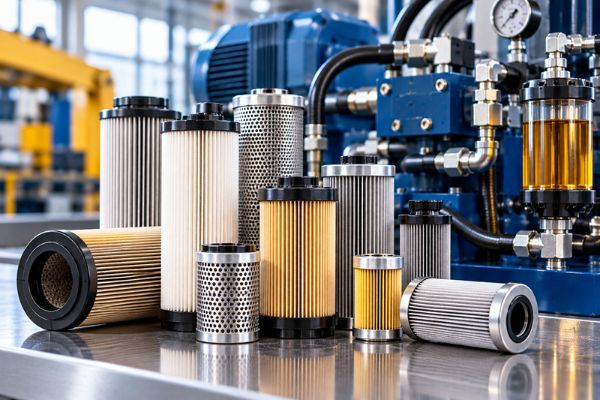
The filter element is the part inside a filter that performs the filtration. Hengst identifies retention capacity, dirt holding capacity and pressure loss as performance characteristics determined by the element and its media.
These characteristics answer different questions:
- Retention capacity: How effectively does the element capture particles?
- Dirt holding capacity: How much contamination can the element retain under specified conditions?
- Pressure loss: How much resistance does the element create as fluid passes through?
A suitable purchase should address all three. Selecting only by cartridge size leaves the filtration performance unclear.
What Should You Check Before Buying Hengst Filter Elements?
Begin with the complete element code and housing identification. Then confirm the proposed replacement against the equipment documentation.
| Selection Factor | What Buyers Should Check |
|---|---|
| Element Identification | Complete part number, including suffixes |
| Housing Compatibility | Approved housing model and element arrangement |
| Dimensions | Length, diameters, end caps and connection details |
| Filtration Specification | Micron rating and stated retention efficiency |
| Filter Media | Required media grade and fluid suitability |
| Seals | Specified material and temperature compatibility |
| Operating Conditions | Flow, oil viscosity and temperature range |
| Element Limits | Permissible differential pressure |
| Bypass Arrangement | Whether a bypass is required and its specified setting |
Ask the supplier to list the proposed specifications in the quotation. A written match is easier to review than a general statement that an element is “equivalent.”
Is Micron Rating Enough to Compare Two Filter Elements?
Micron rating alone is not a complete performance comparison. Buyers also need the stated filtration efficiency and the test basis used to describe it.
For example, two quotations may show the same micron rating while leaving other requirements unspecified. Before comparing prices, ask each supplier to identify the media grade and retention-performance data.
Avoid changing to a finer grade without checking the machine’s requirements. The objective is to achieve suitable oil cleanliness with acceptable filtration operating conditions.
Why Do Filter Media and Dirt Holding Capacity Matter?
Filter media affects particle capture, contamination storage and pressure loss. Hengst’s published information for multilayer glass-fibre media shows that media construction can influence dirt holding capacity.
This matters when a buyer compares elements that have similar dimensions. Matching the outer shape does not demonstrate matching media performance.
Ask for the specific media designation and supporting technical data. Do not assume that a claim about one Hengst media series applies to every Hengst element or to an independently manufactured replacement.
Actual replacement frequency will also depend on contamination entering the system and the machine’s maintenance conditions.
Why Must Seal Material and Oil Type Be Checked?
Fluid suitability is specific to the element. Buyers should verify the exact combination of filter media, seals and construction rather than choosing a seal material in isolation.
For example, Hengst’s published listings identify item 1002673B with NBR seals and HFC/HFA suitability, while item 1003245B has FKM seals and is marked unsuitable for HFC/HFA fluids. These are product-specific examples, rather than a general rule about either seal material.
Share the exact oil or fluid designation when requesting a quotation. “Hydraulic oil” may not provide enough information to confirm compatibility.
How Do You Avoid Hengst Filter Part-Number Confusion?
Keep the complete code from the existing element, including all letters and suffixes. If the markings are unclear, photograph the housing nameplate and check the machine’s maintenance records.
Hengst states that its Hydraulic Filtration division has been part of the Hengst Group since 2021, following its earlier Bosch Rexroth history. Older purchasing records may therefore contain different brand references.
This history can help explain an enquiry, but it does not prove that any Hengst element will replace any Bosch Rexroth element. Confirm the particular cross-reference and technical requirements before ordering.
When Should a Hengst Hydraulic Filter Element Be Replaced?
Follow the instructions for the equipment and installed filter. Use the specified maintenance interval and condition-monitoring criteria rather than a single timetable for every machine.
Useful maintenance records include:
- The installed element’s complete code.
- Replacement date and operating hours.
- Relevant filter-indicator readings.
- Unusual contamination found during maintenance.
- Details of any changes to the oil or operating conditions.
Interpret filter indicators according to their instructions, including the stated temperature conditions.
If replacement becomes unusually frequent, investigate the reason. Review contamination entry points, maintenance practices and oil-condition information before assuming another element alone will resolve the issue.
Clean and reuse an element only when its manufacturer explicitly permits it.
Common Mistakes When Ordering Hengst Replacement Filter Elements
Purchasing mistakes often begin with missing information. Avoid:
- Using a photograph as the only compatibility check.
- Omitting part-number suffixes from the enquiry.
- Comparing price without comparing specifications.
- Assuming all media with the same micron label performs identically.
- Selecting seals without confirming the fluid.
- Confusing housing working pressure with element differential-pressure limits.
- Treating a compatible replacement as an original Hengst product.
A quotation should clearly identify the product manufacturer and the proposed replacement specification. This helps purchasing and maintenance teams review the same information before approving an order.
Hengst Filter Element Enquiries in Ahmedabad, Gujarat
Madhav Filtcare & Hydraulics is an Ahmedabad-based manufacturer and supplier of industrial replacement filter elements, serving buyers in Gujarat and across India.
For a Hengst replacement filter element enquiry in Ahmedabad, share the existing element’s full code, housing details, photographs and required quantity. Ask Madhav Filtcare to confirm whether a suitable replacement can be offered for that specific application.
Include the oil type, filtration requirement and available operating information. Confirm media, seals, operating limits, delivery time and quotation terms before purchase.
State whether you need an original Hengst element or an independently manufactured compatible replacement. This helps keep the enquiry and quotation clear.
Frequently Asked Questions
Use the complete code on the existing element and the housing identification. Check the equipment documentation and request confirmation of the proposed match.
Size confirms only part of the fit. Media, filtration efficiency, seals and operating limits also need checking.
Send the part number, housing model, clear photographs, dimensions and quantity. Include the oil designation, filtration requirement and operating conditions where available.
Do not assume universal interchangeability. Confirm the exact element cross-reference and specifications for the installed housing.
Only after confirming compatibility with the fluid, temperature and element design. A seal change should be reviewed as a specification change.
Follow the instructions for the particular element. Cleaning is suitable only when the element is specifically designed and approved for reuse.
Contact Madhav Filtcare & Hydraulics with your element and application details. Ask for confirmation of compatibility, availability and delivery arrangements.
Request a replacement quotation: Share your Hengst element code and housing details with Madhav Filtcare & Hydraulics.